Table of Contents
A culinary legacy from Venice to Corfu
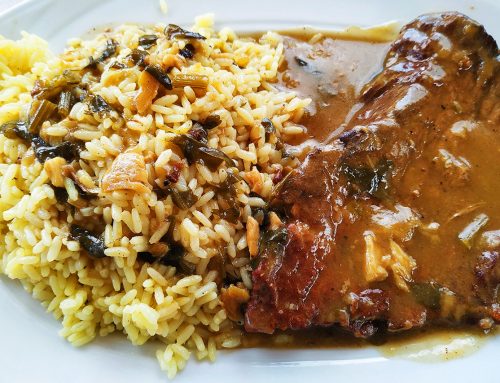
Ask any Corfiot what to eat first when you arrive on the island, and pastitsada will come up fast. On Corfu it’s not just a Sunday dish — it’s the smell of a family kitchen on a name day, the plate you order at the taverna to know you’ve properly arrived. Its roots go back to the centuries of Venetian rule, and over time this rich, aromatic stew became a symbol of Corfiot hospitality.
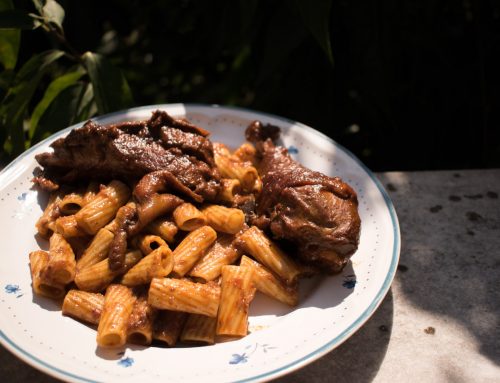
At its heart, pastitsada is simple: tender meat and a deep, spiced tomato-and-wine sauce, served over thick pasta. What was once a dish for noble Venetian households evolved, in the island’s villages, into the comforting Sunday staple you’ll find today.
What makes pastitsada special
Three things set Corfiot pastitsada apart from every other Greek stew. Its Venetian roots are right there in the name — “pastitsada” is believed to come from the Venetian pastizzada, a meat dish cooked long and slow with wine and spices. Its signature is a unique spice blend that Corfiots call spetseriko: a family-secret mix of sweet and savoury spices that gives the dish its unmistakable warmth. And it’s built on hearty ingredients — beef or rooster, slow-cooked with tomatoes, cinnamon, cloves and red wine until the flavours turn deep and complex and the meat falls apart at the touch of a fork.
The traditional recipe
Every Corfiot family swears by its own version, but a traditional pastitsada usually comes down to these ingredients:
- Beef or rooster (kokoras)
- Onion and garlic
- Tomato paste and fresh tomatoes
- Red wine
- Olive oil
- Cinnamon, cloves and bay leaves
- A secret spice mix (spetseriko)
- Thick tubular pasta, such as bucatini
How it comes together: you brown the meat well, soften a generous amount of onion and garlic, then build the sauce with wine, tomato and the spices and let everything cook down slowly — an hour and a half to two hours, sometimes more. Slow simmering is the whole secret: it’s what makes the meat melt-in-your-mouth tender and lets it soak up the sauce. The thick pasta is boiled separately and finished with plenty of the rich sauce and a shower of grated cheese on top. Don’t rush it — pastitsada is a dish that rewards patience.
A dish for every celebration
On Corfu, pastitsada isn’t just food — it’s a celebration. Families make it for Sunday lunches, name days and festive gatherings, and in the villages it’s still served the traditional way: a glass of local wine on the side and no one in a hurry to leave the table. It’s the kind of meal that turns a lunch into an afternoon.
Where to eat pastitsada in Corfu
You’ll find it on almost every traditional menu, but the best versions come from the tavernas that still cook it the old way — the ones in the villages and the back streets of the Old Town, where it’s simmered for hours rather than reheated. If you’re building a Corfiot food list, don’t stop at pastitsada: pair it with the island’s other specialities in our Corfu gastronomy guides, and save room for a taste of local kumquat afterwards.
FAQs about Corfu’s pastitsada
What is the origin of pastitsada?
Pastitsada originates from Corfu and was heavily influenced by Venetian cuisine during the centuries of Venetian rule.
Is pastitsada made with beef or chicken?
Traditionally it was made with rooster (kokoras), but today beef is the most common choice.
What spices are used in pastitsada?
The dish relies on a special spice mix called spetseriko, typically including cinnamon, cloves, nutmeg and other family-secret spices.
Can I find pastitsada outside Corfu?
Some Greek restaurants serve it, but the most authentic pastitsada experience is on the island itself.
Taste the history
Pastitsada is more than a delicious stew — it’s a window into Corfu’s past, where Venetian influence met local Greek tradition and became something entirely the island’s own. Whether you eat it in a seaside taverna or a village kitchen, every bite tells a story. Next time you’re on Corfu, make sure pastitsada is at the top of your food list.